LinkedIn Live with Brennen Bliss
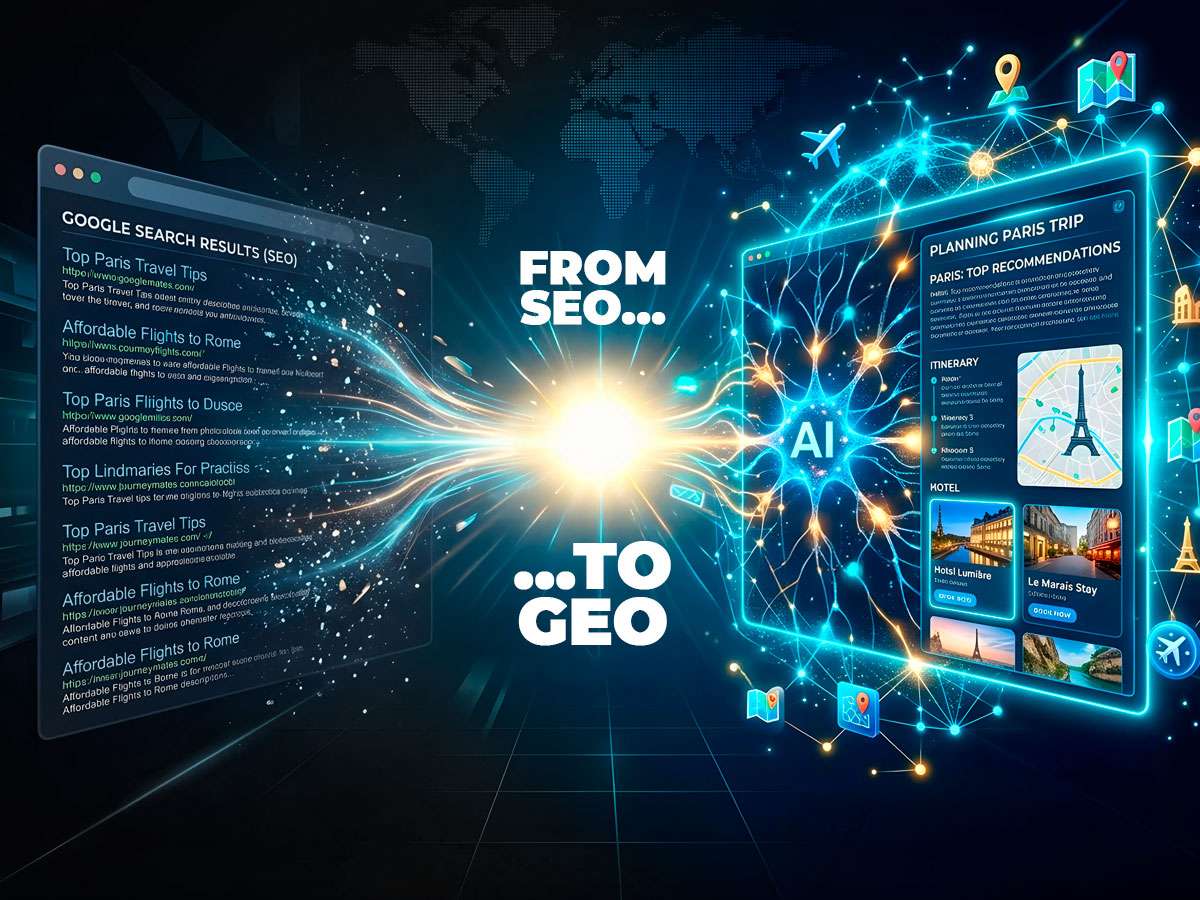
Winning the Visibility Game: From SEO to GEO in the Age of AI Search
If you’ve noticed that your Google search results look a little different lately, you aren’t alone.
Between AI overviews, “things to do” carousels, and a sea of sponsored links, the traditional “blue links” of organic search are being pushed further down the page.
For this discussion, Roman Townsend sat down with Brennan Bliss, CEO and Founder of Propellic, to discuss the seismic shift currently hitting travel brands: the transition from Search Engine Optimization (SEO) to Generative Engine Optimization (GEO).
The New Reality: Search is Changing
For decades, SEO was the undisputed king of digital marketing. But as Brennan points out, the landscape has shifted. Today, over 60% of travel purchases involve an interaction with a search service, but those services now include AI-driven platforms like Gemini, Perplexity, or ChatGPT.
“Search is moving from a list of results you interpret yourself to an aggregated experience,” Brennan explained. “Large Language Models (LLMs) are now running searches for the user, taking the results, and returning a synthesized answer. You’re still getting a search; you’re just not having to do it yourself.”
Why GEO is Urgent for Travel Brands
While some might dismiss the AI hype as a marketing scare tactic, the risk for travel brands is real. If your business is heavily dependent on organic search traffic, that “real estate” is shrinking.
Google is moving toward a “zero-click” environment where users get their answers without ever leaving the search page. Brennan’s advice? Don’t wait for the “switch to flip” entirely. If your organic traffic is already deteriorating, GEO is the strategy required to replace it.
The Surprising Power of PR in the AI Era
One of the most fascinating takeaways from the session was the evolving role of PR. In the past, PR and performance marketing lived in separate silos. In the age of AI, they are merging.
“I was never super hot on PR until now,” Brennan admitted. “But it is driving performance marketing outcomes through a concept called co-occurrence.”
When AI models are trained, they look at the frequency, sentiment, and context of brand mentions across the web. High-quality PR (syndicated across reputable news sites and industry journals) teaches the AI that your brand is an authority in a specific niche. If a press release links your brand to “luxury travel tech,” the AI is far more likely to cite you when a user asks for recommendations in that category.
Quick Wins for Travel Teams
How can travel brands start winning in this new environment? Brennan shared a few essential moves:
- Focus on the Bottom of the Funnel: Stop obsessing over top-of-funnel “inspiration” content. Instead, enrich your product, category, and destination pages.
- Be Specific: AI thrives on detail. Talk about exactly who your tours are for: mention family sizes, specific experiences, and unique niches.
- Build Authority via Distribution: One of the fastest ways to become a “trusted source” for AI is to create a high-value report or study and distribute it widely across the web.
- Avoid the “No Index” Trap: It sounds simple, but ensure your technical SEO is sound so that AI crawlers can actually find and “read” your expertise.
Looking Ahead
The consensus is clear: the line between SEO and GEO is blurring. To stay visible, travel brands must ensure their content isn’t just searchable, but “trainable” for the AI engines that travelers are increasingly turning to.
As Brennan noted, “The active SEO needs to include GEO now, and GEO can’t exist without SEO.”
Missed the live session? Watch it here.